Power quality is one of those terms that gets used constantly in electrical engineering circles — but rarely explained clearly enough to take action on. If your facility experiences unexpected equipment failures, nuisance tripping, overheating transformers or high energy bills with no obvious cause, power quality is almost always part of the answer.
Defining Power Quality: More Than Just Voltage
Power quality refers to the characteristics of the electrical supply that allow equipment to function correctly and efficiently. It covers voltage magnitude, frequency, waveform shape, and symmetry across phases. A “good” power supply delivers a clean, stable sine wave at the correct voltage and frequency — consistently.
When any of these parameters deviate from their nominal values, equipment performance degrades, energy is wasted, and reliability drops. The IEEE defines power quality disturbances across several categories, each with its own measurement methodology and mitigation strategy.
The Most Common Power Quality Problems
Understanding the specific disturbance type is the first step to solving it. The six most prevalent issues in industrial environments are:
- Voltage sags and swells — Short-duration deviations from nominal voltage, often caused by large motor starts, welding equipment or utility switching events.
- Harmonics — Distortion of the voltage or current waveform caused by non-linear loads such as VFDs, UPS systems and switch-mode power supplies.
- Transients and surges — High-energy, brief spikes caused by lightning, capacitor switching or arc flash events.
- Voltage imbalance — Unequal voltages across the three phases, which accelerates motor heating and failure.
- Frequency deviations — Typically relevant for islanded systems or facilities with on-site generation.
- Flicker — Rapid, repetitive voltage fluctuations that can affect lighting and sensitive instrumentation.
What Power Quality Issues Actually Cost You
The financial impact of poor power quality is significant and often underestimated. Direct costs include premature equipment failure, motor rewinds, transformer replacements and increased energy consumption. Indirect costs — lost production, unplanned downtime, quality defects — often far exceed the direct costs.
Industry data consistently shows that unplanned downtime in manufacturing can cost anywhere from $10,000 to $250,000 per hour depending on the sector. A significant percentage of that downtime traces back to electrical reliability issues rooted in power quality.
IEEE and NFPA Standards: The Compliance Framework
Two standards bodies define the benchmarks for power quality. IEEE 519 establishes harmonic limits for both users and utilities at the point of common coupling. IEEE 1159 defines the classification and measurement methodology for power quality phenomena. On the safety side, NFPA 70 (NEC) and NFPA 70B provide the compliance framework for installation and ongoing maintenance.
AEE-certified engineers are trained to work within both frameworks, ensuring that diagnoses and recommendations are both technically sound and compliant with applicable standards.
How to Start Diagnosing Power Quality in Your Facility
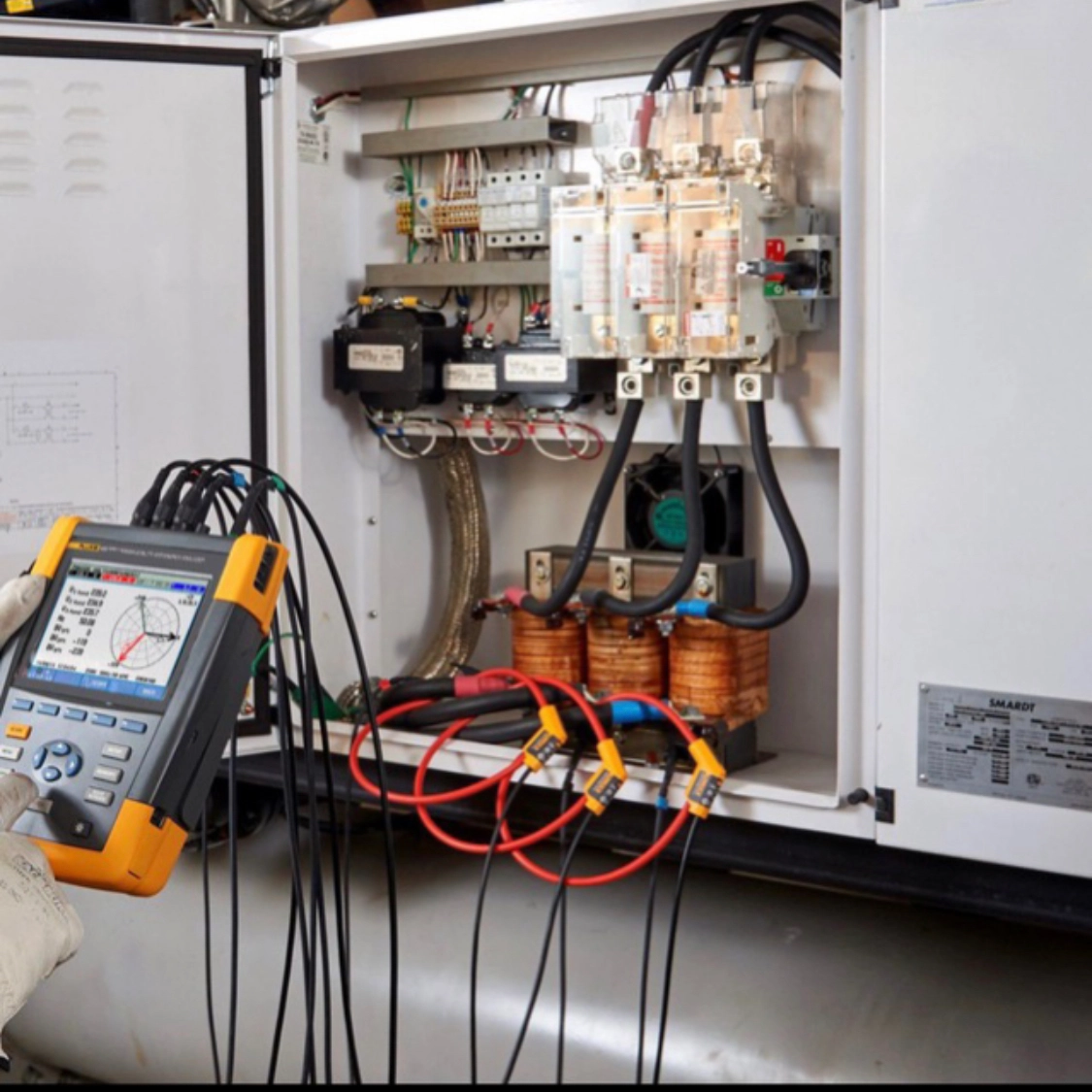
Effective diagnosis starts with measurement, not assumptions. A power quality analyzer installed at the main service entrance and at problematic equipment can capture voltage, current, harmonics, sags, swells and transients simultaneously over days or weeks. The data reveals patterns — whether the disturbances are utility-side, load-generated, or both.
At Argoe Group, our diagnostic process follows a structured methodology: measure first, correlate with operational events, identify root causes, then design targeted solutions. We don’t recommend mitigation equipment until we understand what the data says.
Frequently Asked Questions
Is power quality the same as power reliability?
No. Reliability refers to whether power is available at all (uptime/outages). Power quality refers to the characteristics of that power when it is available. A facility can have 99.9% uptime and still suffer significant losses due to poor power quality.
Which industries are most affected by power quality?
Manufacturing, mining, oil & gas, automotive and data centers are most sensitive. Any industry with large variable-speed drives, precision CNC equipment, or process-critical instrumentation is exposed.
How long does a power quality audit take?
A baseline measurement campaign typically runs 7–14 days to capture full operational cycles. Analysis and reporting add another 5–10 business days. Urgent assessments can be scoped down, but longer data collection produces more reliable root-cause conclusions.
Ready to understand what’s happening in your electrical system? Contact Argoe Group for a professional power quality assessment backed by 22+ years of field experience.