IEEE 519 is frequently referenced in power quality discussions, but its actual requirements are widely misunderstood. Many engineers apply it to internal distribution systems where it doesn’t technically apply, or miss compliance obligations at the utility interface where it does.
What Does IEEE 519 Actually Govern?
IEEE 519 governs harmonic current injection and resulting voltage distortion at the Point of Common Coupling (PCC) — the metering point where the utility and customer system interface. It establishes responsibilities for both utilities and consumers: utilities must maintain voltage distortion below defined limits; consumers must limit harmonic current injection so utility voltage distortion limits are not exceeded.
Current Harmonic Limits
Current harmonic limits depend on the ratio of available short-circuit current to maximum demand load current (Isc/IL) at the PCC. The higher this ratio, the higher the allowable harmonic injection. Total Demand Distortion (TDD) limits range from 5% for weak systems to 20% for very strong systems.
Voltage Harmonic Limits
IEEE 519 limits THDV to 5% for systems below 1 kV and 69 kV, with individual harmonic limits of 3%. At medium voltage (1–69 kV), THDV is limited to 5% total and 3% individual. At transmission voltages above 69 kV, limits tighten further.
What Changed in IEEE 519-2022
Key updates: clarification of the PCC definition for multi-tenant facilities; updated measurement requirements aligned with IEC 61000-4-30; revised guidance on statistical assessment using 95th and 99th percentile values over measurement periods; updated commentary on distributed energy resource impacts.
How to Demonstrate Compliance
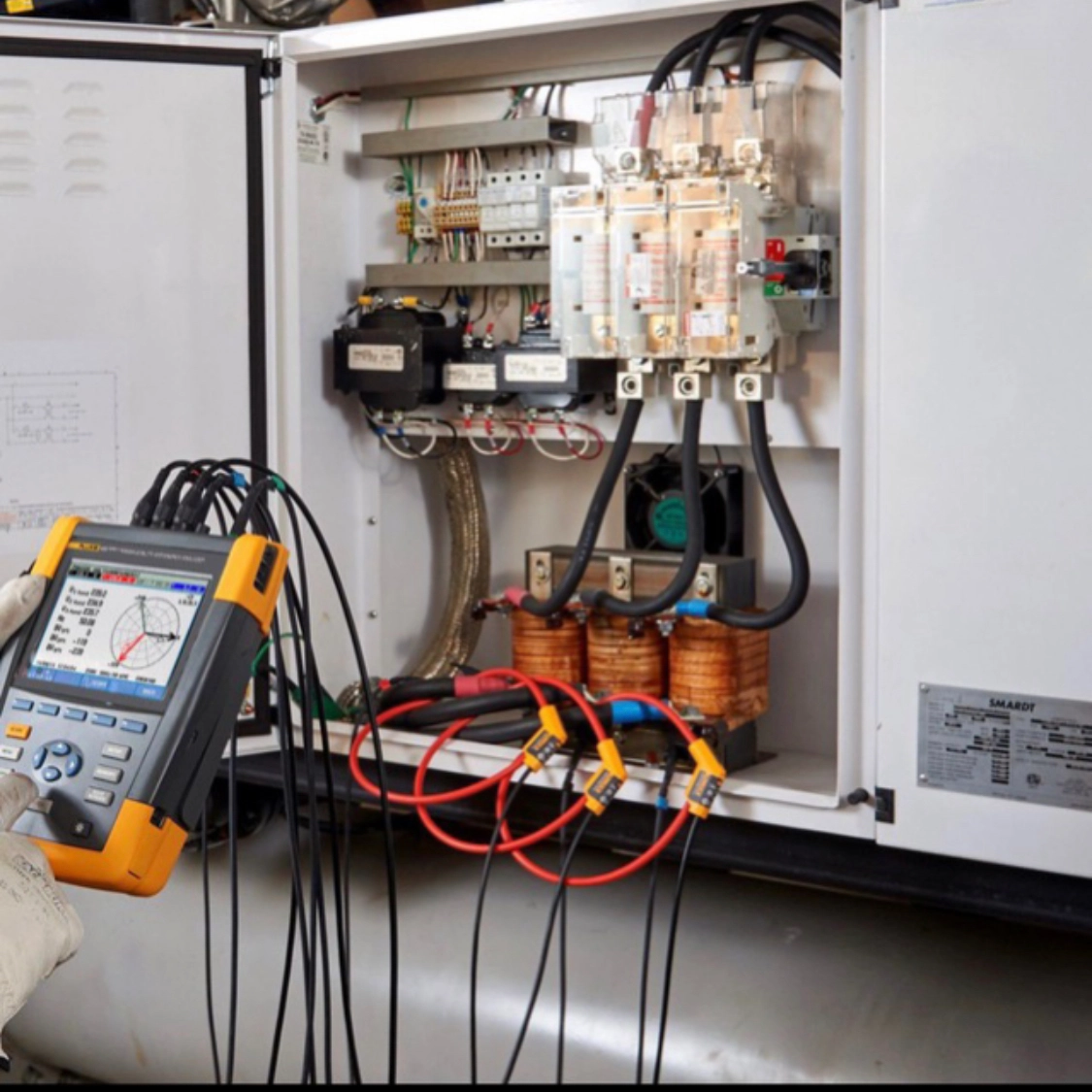
Compliance requires measurement using a Class A power quality analyzer per IEC 61000-4-30 at the PCC. The measurement period should cover at least one week of representative operation. The 2022 standard recommends using the 95th percentile of 10-minute aggregated harmonic values as the compliance metric.
Consequences of Non-Compliance
IEEE 519 is a recommended practice, not a regulatory mandate. However: utility service agreements increasingly reference IEEE 519 limits; large industrial customers may face filtering requirements as a condition of service; and equipment warranties may not cover harmonic-related damage if the operating environment exceeds stated limits.
Frequently Asked Questions
Does IEEE 519 apply to my internal distribution system?
Not directly. IEEE 519 applies at the PCC with the utility. For internal distribution, equipment manufacturer specifications and NEC requirements govern. However, keeping internal THDV below 8% is a widely adopted engineering practice.
Contact Argoe Group to discuss your power quality assessment needs.