A power quality audit is only as good as its methodology. Many facilities invest in measurement equipment but generate data without a systematic approach — producing reports full of numbers that don’t lead to actionable conclusions.
Step 1: Define Scope and Objectives
Before placing a single measurement device, define what you are trying to answer: IEEE 519 compliance? Root-cause analysis for recurring failures? Baseline before a major load addition? A vague scope produces an inconclusive audit.
Step 2: Review Single-Line Diagrams
Review facility single-line diagrams to identify the PCC, main service transformers, major non-linear loads, and existing protection equipment. Review maintenance records and failure logs — patterns are the most direct indicators of where to measure.
Step 3: Install Measurement Equipment
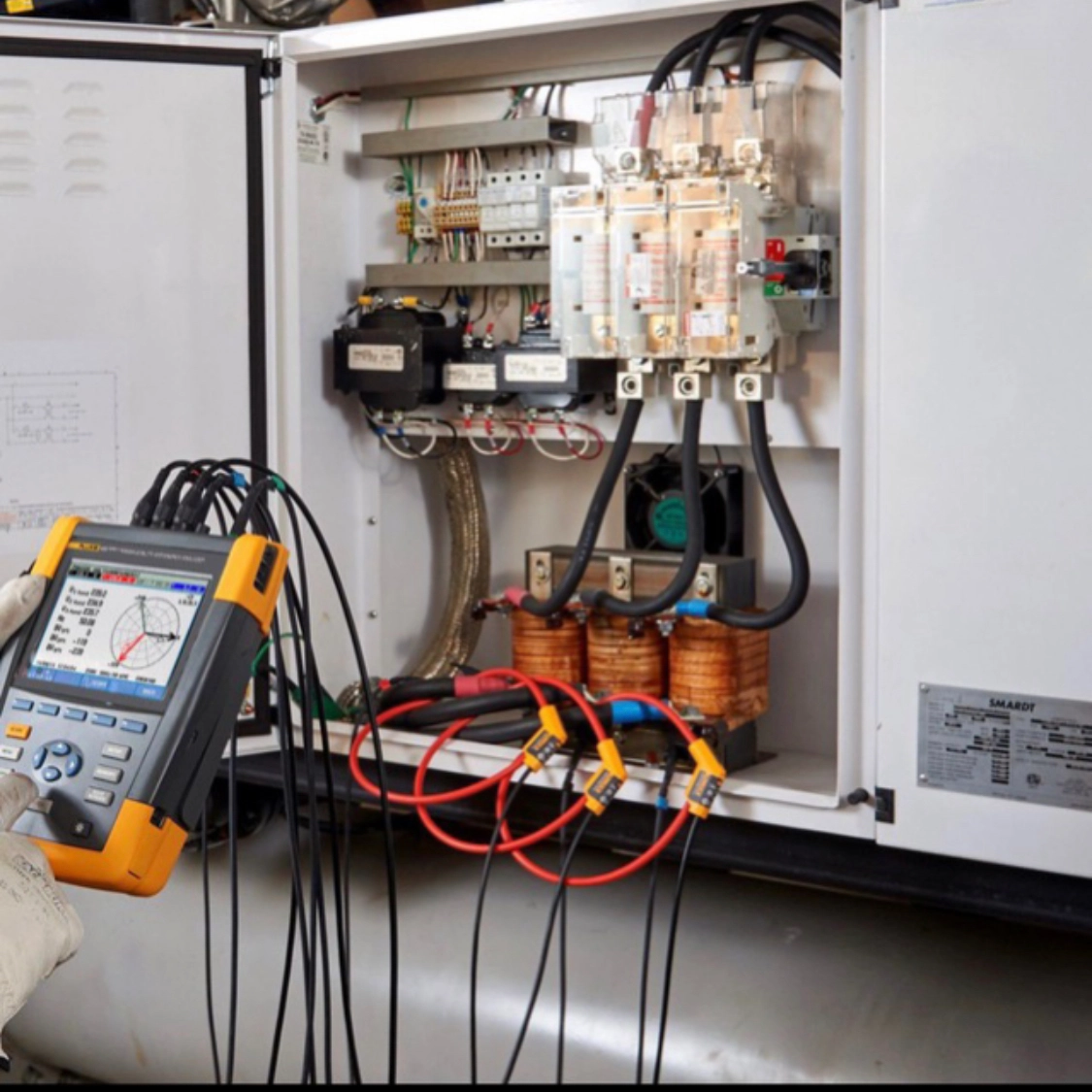
Measurement points should include: main service entrance, substation secondary buses, critical load feeders, and neutral conductors. Use Class A analyzers per IEC 61000-4-30. Verify CT ratios, PT ratios and phasing before beginning.
Step 4: Data Collection Period
Minimum useful period: 7 days covering one full operational cycle. For facilities with seasonal or shift-based load variations, 14–30 days is preferred. Capture: RMS voltage/current, harmonic spectra to 50th harmonic, sags/swells/interruptions, and transients.
Step 5: Analysis and Root-Cause Identification
Start with trend review — correlating disturbances with time-of-day, shift changes, specific equipment, or utility events. Cross-reference voltage and current data to distinguish load-generated disturbances from utility-sourced events. Root cause requires engineering judgment alongside the data.
Step 6: Reporting and Recommendations
A professional audit report includes: executive summary, full measurement data with statistical summaries, compliance assessment, root-cause conclusions with supporting evidence, and prioritized recommendations with estimated costs and payback periods.
Common Mistakes
- Measuring for too short a period
- Only measuring at one point
- Not correlating data with operational logs
- Using Class B instruments for compliance measurement
- Recommending mitigation before confirming root cause
Frequently Asked Questions
How much does a professional power quality audit cost?
A single-point baseline assessment for a small facility can be completed for a few thousand dollars. A comprehensive multi-point audit for a large industrial site runs proportionally more. The ROI is typically recovered in the first equipment failure prevented.
Contact Argoe Group to discuss your power quality assessment needs. Our AEE-certified engineers are ready to help.