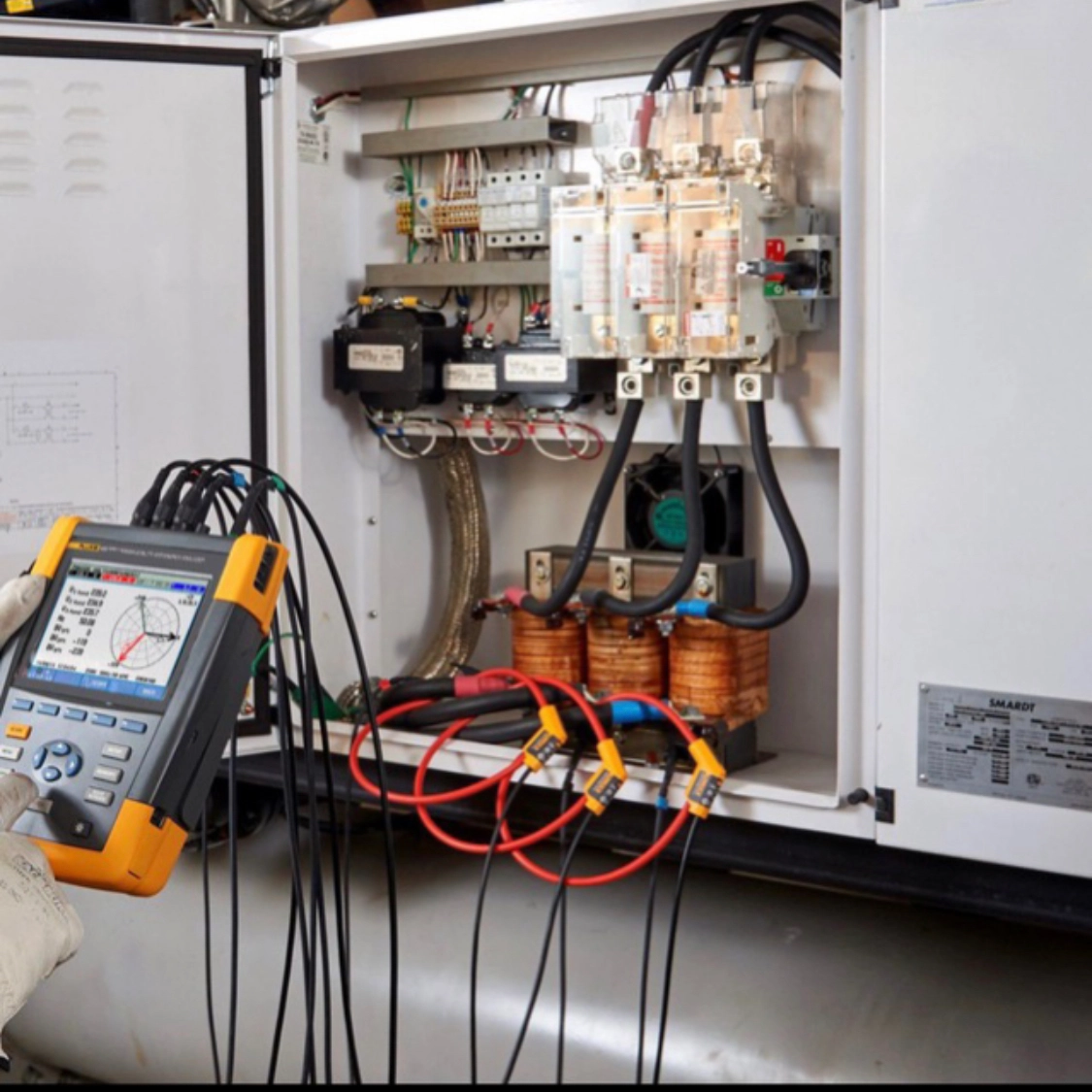

IEEE 519 Compliance: What Every Facility Engineer Needs to Know
IEEE 519 is frequently referenced in power quality discussions, but its actual requirements are widely misunderstood. Many engineers apply it to internal distribution systems…
Variable frequency drives, UPS systems, rectifiers, switch-mode power supplies — the loads that make modern industrial operations efficient are also the primary generators of harmonic distortion.
Harmonics are voltage or current components at frequencies that are integer multiples of the fundamental frequency (60 Hz in North America). The 3rd harmonic is at 180 Hz, the 5th at 300 Hz, the 7th at 420 Hz, and so on. Total Harmonic Distortion (THD) is the ratio of the RMS value of all harmonic components to the RMS value of the fundamental, expressed as a percentage. A THD of 5% or below is generally acceptable; values above 10–15% indicate a problem requiring attention.
Harmonics cause: transformer overheating via increased eddy current losses; capacitor bank resonance that can cause catastrophic failure; neutral conductor overloading (triplen harmonics sum rather than cancel); motor heating from negative-sequence rotating fields; and metering errors that affect billing accuracy.
IEEE 519 establishes harmonic limits at the Point of Common Coupling (PCC). Current harmonic limits depend on the Isc/IL ratio at the PCC. Voltage THD limits are 5% total with 3% individual harmonic limits for systems below 1 kV. Compliance must be demonstrated through measurement, not assumption.
Any facility where VFDs, UPS systems or large rectifiers account for more than 20% of total load should conduct a harmonic assessment. Transformer overheating, capacitor bank failures and neutral overcurrent are strong indicators of an existing problem.
Contact Argoe Group to discuss your power quality assessment needs. Our AEE-certified engineers are ready to help.
IEEE 519 is frequently referenced in power quality discussions, but its actual requirements are widely misunderstood. Many engineers apply it to internal distribution systems…
A power quality engagement done well produces data-driven diagnoses, specific actionable recommendations and measurable results. A power quality engagement done poorly produces a thick…
A power quality audit is only as good as its methodology. Many facilities invest in measurement equipment but generate data without a systematic approach…
Let's discuss how we can help optimize your electrical systems