A voltage sag lasting a fraction of a second can shut down a production line, corrupt a batch process, or trip a VFD protecting a critical pump. For industrial facilities, voltage sags are among the most frequent and economically damaging power quality events — yet they remain invisible without the right measurement tools.
What Is a Voltage Sag?
Per IEEE 1159, a voltage sag is a decrease in RMS voltage to between 10% and 90% of nominal, lasting from half a cycle to one minute. Events shorter than half a cycle are classified as transients; events longer than one minute are undervoltages. Sags are directional — they propagate from the point of disturbance through the distribution system and affect equipment at multiple levels simultaneously.
What Causes Voltage Sags?
The two primary origins of voltage sags are utility-side events and facility-internal loads:
- Utility switching operations and fault clearing on the distribution network
- Large motor starts — a 500 HP motor at full voltage start draws 6–7x full load current, creating a local sag
- Arc furnaces and welding equipment with highly variable, impulsive load demand
- Transformer energization during switching events
- Fault events on adjacent feeders that are cleared by upstream protective devices
The Hidden Costs of Voltage Sag Events
The direct cost of a single sag event is hard to calculate because it’s embedded in broader downtime and quality metrics. But consider: a single production line restart after an unexpected trip can take 30–90 minutes. At manufacturing cost rates of $5,000–$50,000 per hour, even a “minor” sag event carries a 4–5 figure cost tag per occurrence.
Indirect costs include accelerated aging of sensitive electronics, increased scrap rates in precision manufacturing, and repeated nuisance trips that operators begin to normalize — masking a deteriorating electrical environment.
How to Measure and Classify Voltage Sags
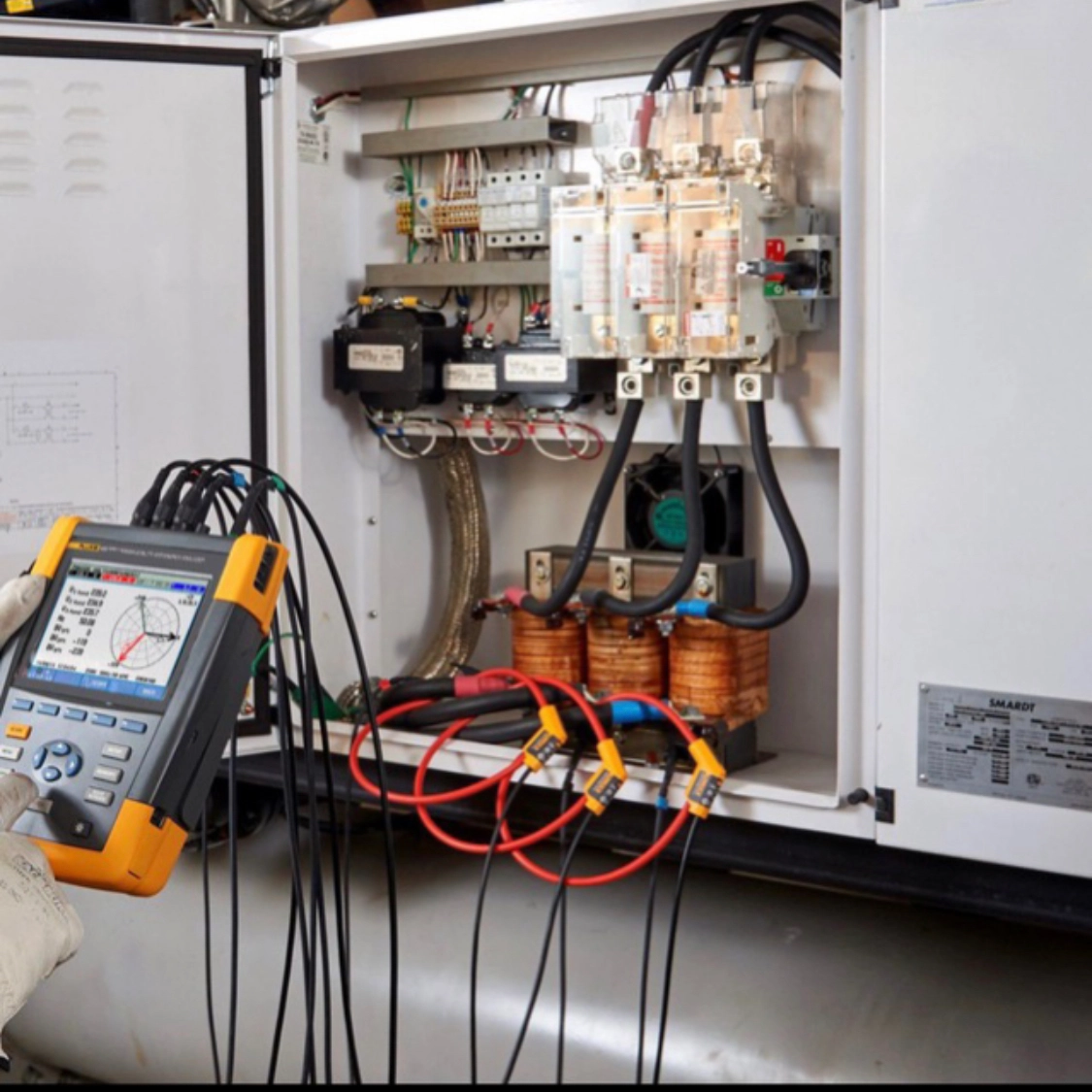
Voltage sags are characterized by two parameters: magnitude (how deep the sag is, expressed as % of nominal) and duration (how long it lasts). IEEE 1159 and IEC 61000-4-30 define measurement methods and classification criteria. A properly configured power quality analyzer captures these parameters with millisecond resolution and builds a SARFI profile over time.
Critical to accurate diagnosis is installing measurement points both at the utility service entrance and at the affected equipment — this determines whether the sag is externally sourced or self-generated.
Mitigation Strategies
Mitigation depends entirely on the root cause. Common solutions include:
- Dynamic Voltage Restorer (DVR): Injects compensating voltage in series with the supply to ride through sag events in milliseconds
- Soft starters and VFDs: Reduce inrush current from large motors, eliminating self-generated sags
- UPS systems: Provide ride-through for sensitive loads during short sag events
- Network reconfiguration: Feeding sensitive loads from dedicated circuits with lower impedance paths
- Coordination with the utility: For externally caused sags, working with the utility on feeder protection settings or dedicated service
FAQ
How many sag events per month is “too many”?
There is no universal threshold, but IEEE 1564 and the CBEMA/ITIC curves provide equipment immunity references. Any sag that causes equipment to trip or misoperate is by definition “too many.” Trending over 30–90 days establishes a baseline for comparison after mitigation.
Can voltage sags damage equipment permanently?
Repeated sag events accelerate the aging of power supplies, drive electronics and motor windings without causing immediate failure. The cumulative stress shortens equipment service life significantly — a cost that doesn’t show up until premature replacements are needed.
Argoe Group’s AEE-certified engineers have diagnosed and resolved voltage sag problems across manufacturing, mining and oil & gas facilities. Contact us to discuss your specific situation.